Data Breach Management Software - Act in compliance with GDPR within 72 hours




















What is a data breach?
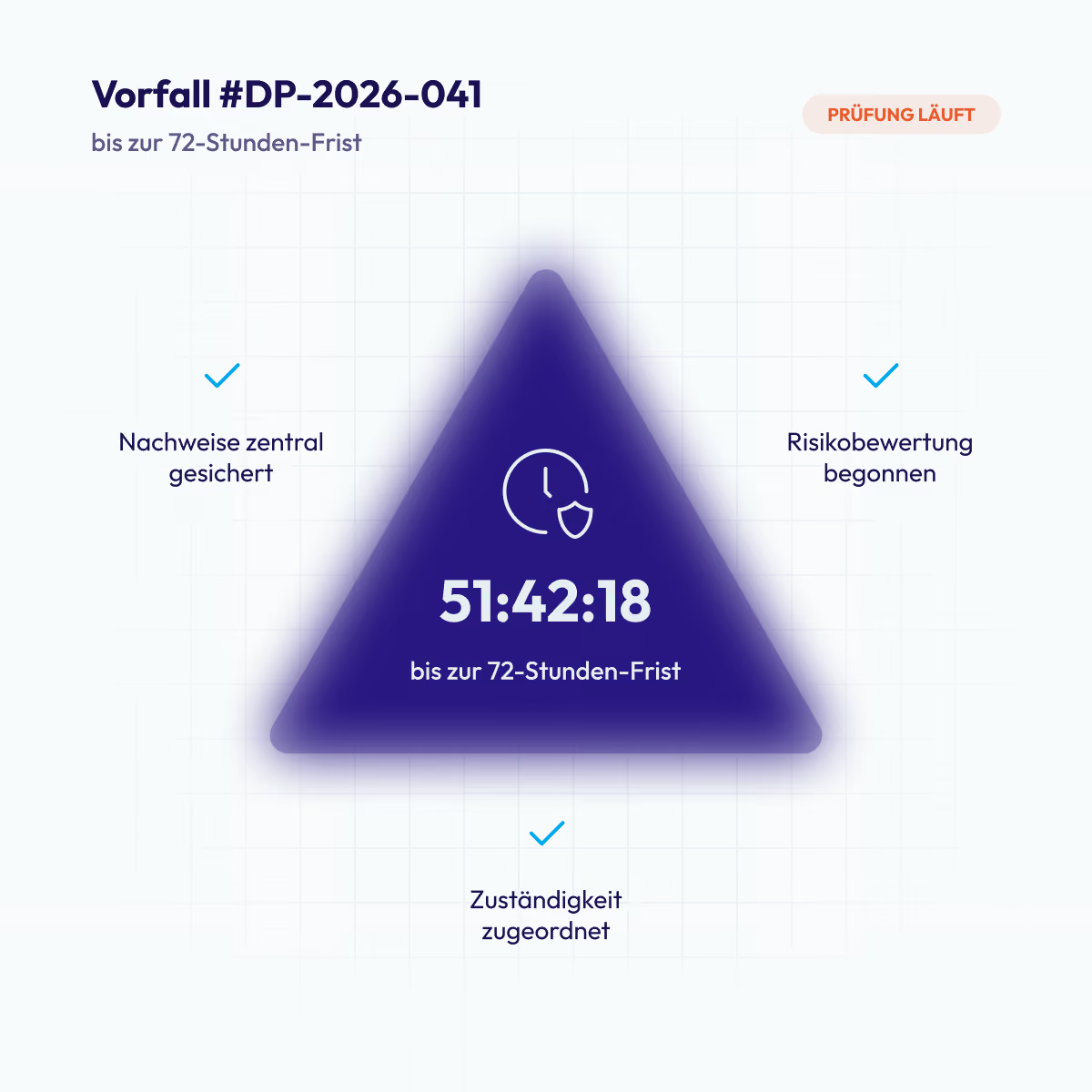
A data breach is a security incident that leads to the accidental or unlawful destruction, loss, alteration, unauthorized disclosure of, or access to personal data.
Typical causes:
- Phishing and compromised access
- Human error
- Technical errors
ROPA software that does the heavy lifting for you
The key factors are the risk to the individuals concerned, the time of discovery, and clear, traceable documentation—even if no notification is ultimately required.


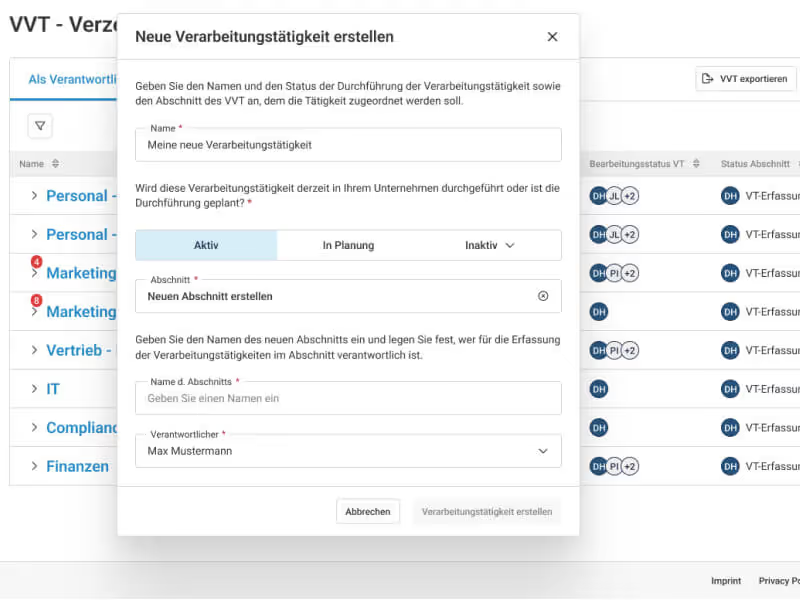
What Proliance 360 does for your record of processing activities – at a glance
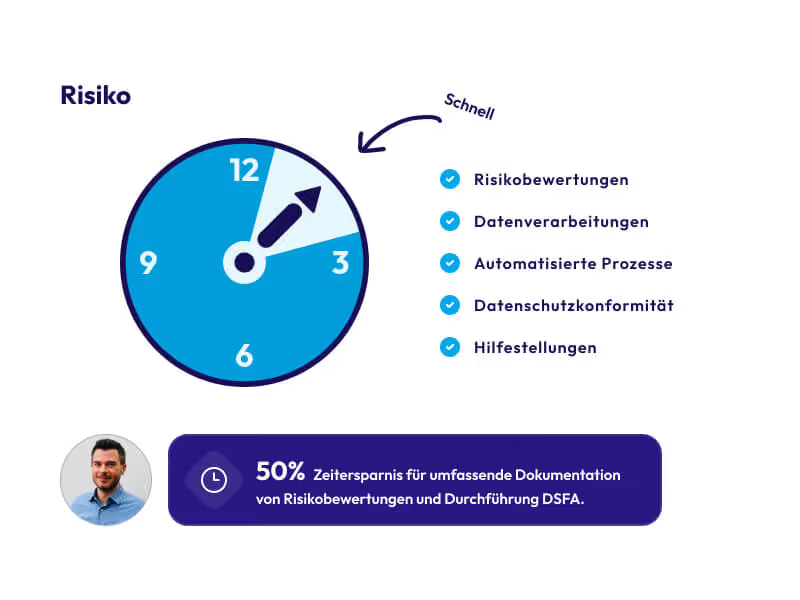
A quick assessment is no substitute for a case-by-case review, but it does make the critical risk issues transparent.
The 7-step data breach process

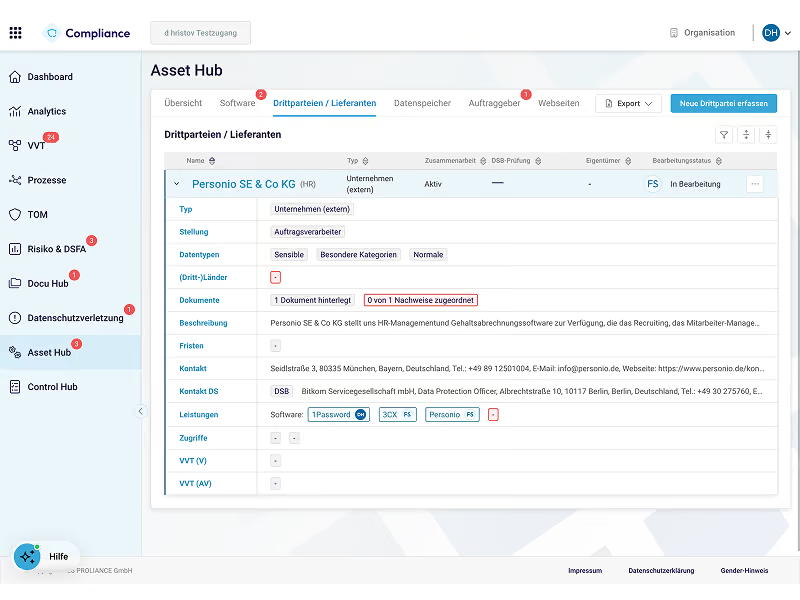
How Proliance supports you during data breaches
Data Breach Management: Without Proliance vs. With Proliance
Manual processes using Excel and email make deadlines, responsibilities, and documentation prone to error. Proliance automates 72-hour monitoring, guides you through the risk assessment, and documents every step in an audit-proof manner.
Without Proliance
- Individual calendars
- Inconsistent
- Fragmented and error-prone
- Media discontinuities
- Complex consolidation
With Proliance
- Automated monitoring
- Structured workflow
- Centralized and audit-proof
- Legal, IT, Security & DPO
- Multi-entity in one system
5 questions about data leaks and how to protect yourself
Our whitepaper provides a clear explanation of how data leaks occur, the potential consequences, and the technical and organizational measures you can take to effectively protect your company.

98% satisfaction: Over 3,000 companies have trusted Proliance since 2017












Data breach software alone isn't enough? No problem: Proliance is also here to support you personally.
Personal data protection expertise for consulting, external DPO support, and audits – tailored to your needs.

Ask now for a non-binding consultation offer





Frequently asked questions about compliance management software
Requests from data subjects must be answered within one calendar month (maximum period). This period can only be extended for valid reasons. The deadline begins on the day the request is received. If a company fails to meet this deadline, individuals who have not received a response to their data subject request can contact their respective State Data Protection Authority.
All individuals whose personal data a company processes are considered data subjects. They can submit a data subject request. If you are unsure whether a company processes your personal data, you can also submit a data subject request to find out. If the company does not process any personal data about you, you will then receive a negative confirmation.
Typically, data subject requests are made in writing and should also be answered in this way – if necessary, after prior identity verification – so that companies have proof of processing the request. However, in principle, information could also be provided orally, if explicitly requested. A data subject request can be fulfilled orally provided the data subject's identity has been verified by other means and if this has been requested by the data subject (Art. 13 para. 1 sentence 3 GDPR). However, since there is no documentation of the response to the request for an oral disclosure (documentation and accountability obligation pursuant to Art. 5 para. 2 GDPR), it is advisable to avoid this form of disclosure.
If a company fails to respond to such a request, it is in breach of applicable law. This means the company can expect to face a warning or a fine. Affected individuals whose requests have gone unanswered can contact the data protection officer of their respective federal state.
The GDPR absolutely requires companies to actively inform individuals as soon as they process personal data. Therefore, data subjects whose personal data is processed must be actively informed of this fact. This also applies even when personal data is provided voluntarily (such as during an application process).
Responding to data subject requests is an obligation for companies under the GDPR. They must document their responses to these requests. Furthermore, if companies fail to respond to such data subject requests, data subjects can file a complaint with the competent supervisory authority.