
Asset Management in ISMS: Centrally Protect Business Processes and Information Assets
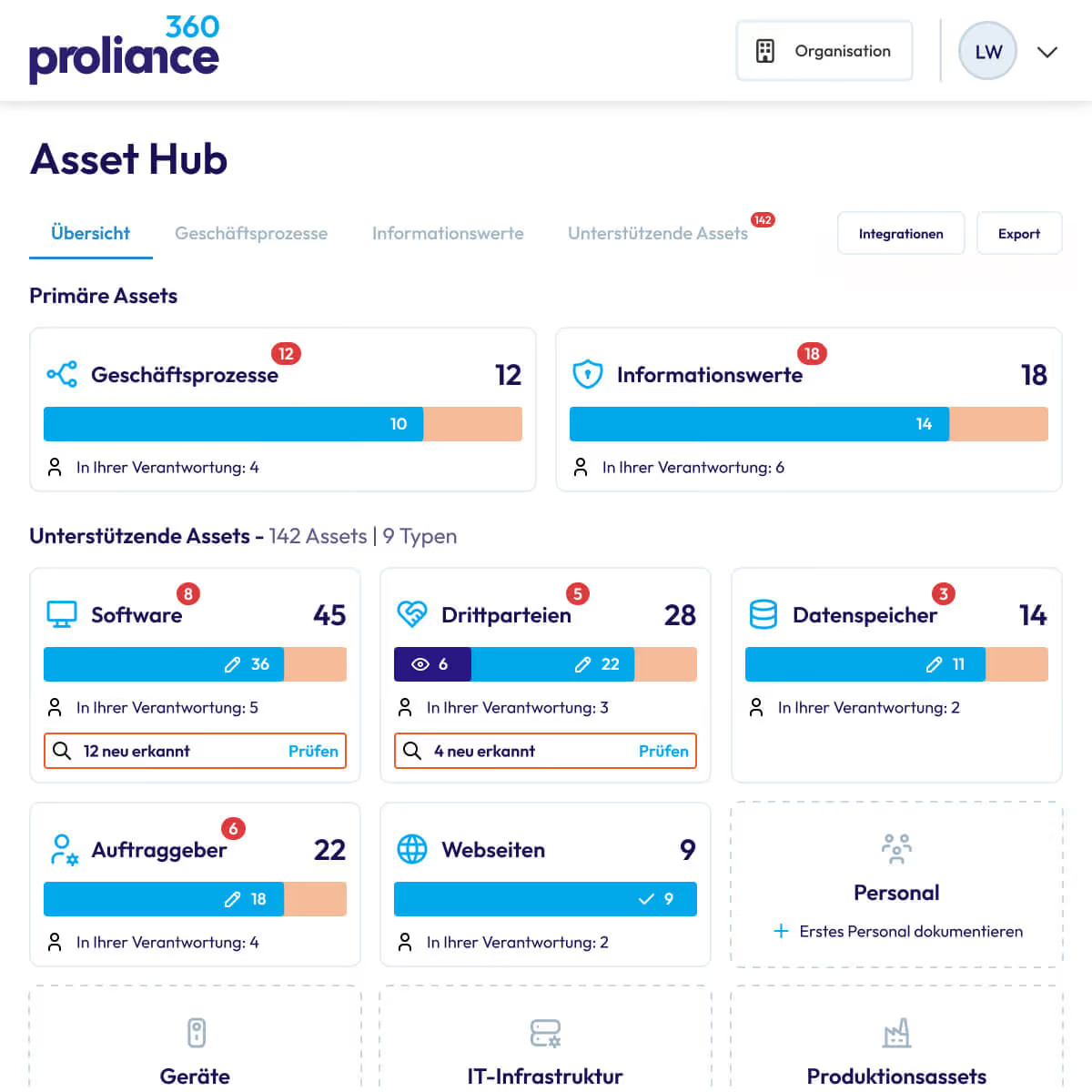
















How the Asset Hub in Proliance 360 simplifies your asset management in the ISMS
The result with Proliance 360: Up to 70% time savings in asset management and an ISMS that passes audits with structure, traceability, and auditability.
Without an Asset Hub
- Lack of overview of ISMS-relevant business processes and information assets
- No overview of which software processes which data or who has access
- Planned software or new service providers are only reviewed late in the process
- During an audit, there is no proof of who reviewed and approved which asset
- Manual research for every service provider and software
- No control over outdated or unused assets

With Asset Hub
- All assets centrally captured and assessed based on their protection needs – you see which assets underpin which business processes and can, for example, build your BCM upon this.
- Full transparency into data types, access rights, and third parties
- Capture already in the evaluation phase, assess in the ISMS, and approve
- Seamless ISMS review and approval workflow with comments, change log, and audit-proof documentation
- 400+ pre-populated asset entries from the Proliance database
- Archive or delete assets for a clean data foundation
The asset management software offers these features for your ISMS


Integration Center: Automatic asset import and efficient synchronization
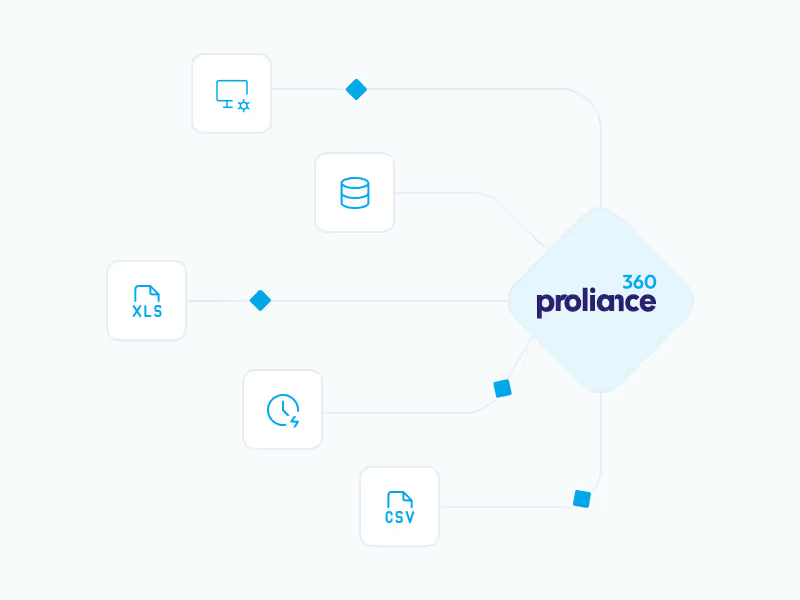
With the new Integration Center, you save valuable time when managing assets: Automatic import from Microsoft Entra ID and structured Excel/CSV mass import reduce manual effort to a minimum. In this way, you benefit from up-to-date information and seamless integration into your IT processes. Further integrations are already being planned — individual requirements can be added as needed.
- Save time through automated import and synchronization
- Easy management of all asset types via Excel/CSV
- More integrations in preparation
With the Asset Hub, you organize and protect business processes, information assets, and other assets




Proliance's ISMS asset management is relevant for you if you…


Particularly relevant for:
- SMEs without their own compliance team save time with pre-filled entries and structured workflows
- Information Security Officers (ISOs) can centrally and transparently manage audit processes, responsibilities, and documentation
- ISMS Managers obtain a complete asset inventory as the foundation for processes, controls, and risk management
- IT Managers & CISOs achieve comprehensive asset documentation without manual overhead
- Companies with ISO 27001, NIS2, or TISAX® obligations are audit-ready from the start
How the Asset Hub specifically supports your asset management within the ISMS

Asset Hub: Central overview and sustainable protection for your data
With Asset Hub, you not only get a central overview, but also the certainty that your most important data and systems are consistently protected and documented. This facilitates both internal management and preparation for external audits — and ensures sustainable compliance.
What regulatory aspects does the Asset Hub cover?
The Asset Hub in Proliance 360 helps you meet key requirements in information security and AI compliance:
Request a free demo now





Additional Modules for a Robust ISMS
Proliance 360 offers you all the building blocks for sustainable information security – from a single source.





Frequently Asked Questions about ISMS Asset Management with Proliance 360
The Asset Hub is the central module in Proliance 360 for the structured capture and management of all your ISMS assets. Within it, business processes and information assets – along with supporting assets such as software, service providers, and data storage – form the foundation for protection requirements, dependencies, controls, and risk management.
The Asset Hub distinguishes between primary and supporting assets. Protection requirements and dependencies are established based on business processes and information assets, which constitute the central (primary) asset types. These are complemented by supporting assets that underpin processes and information: Software (SaaS and on-premise), service providers and other third parties, data storage (self-operated, third-party hosted, or cloud-based), personnel, end devices, IT equipment, office spaces, production facilities, goods, and more. The focus is not on the mere hardware inventory of individual devices (CMDB). The Asset Hub consistently views assets from an information security perspective.
Yes. All audits, changes, and approvals are recorded in an auditable manner. The audit history in the ISMS is accessible and traceable at any time.
Recorded assets automatically serve as the foundation for other modules within Proliance 360. They are used directly in processes, controls, and risk management, eliminating the need to re-enter them. Depending on your package, you utilize the same asset database for information security and data protection – ensuring you only maintain your assets once.
Data Protection Asset Management focuses on the assets required for GDPR documentation – typically service providers, data storage, websites, and clients. ISMS Asset Management takes a much broader approach: It also centers on business processes and information assets and includes a variety of other assets, such as personnel, end devices, IT equipment, office spaces, production facilities, and goods. This enables the determination of protection needs for each security objective (confidentiality, integrity, availability) and to trace them across all dependencies. This should not be confused with pure IT Asset Management, such as a CMDB. The inventorying of individual hardware assets is expressly not the objective.
Yes. ISO 27001 requires a complete inventory of all information-processing assets. The Asset Hub meets this requirement through structured capture, classification of protection requirements, and audit-proof documentation of all information-processing assets.