
Data Protection Impact Assessment (DPIA) in Proliance 360: Conduct structured assessments, document securely
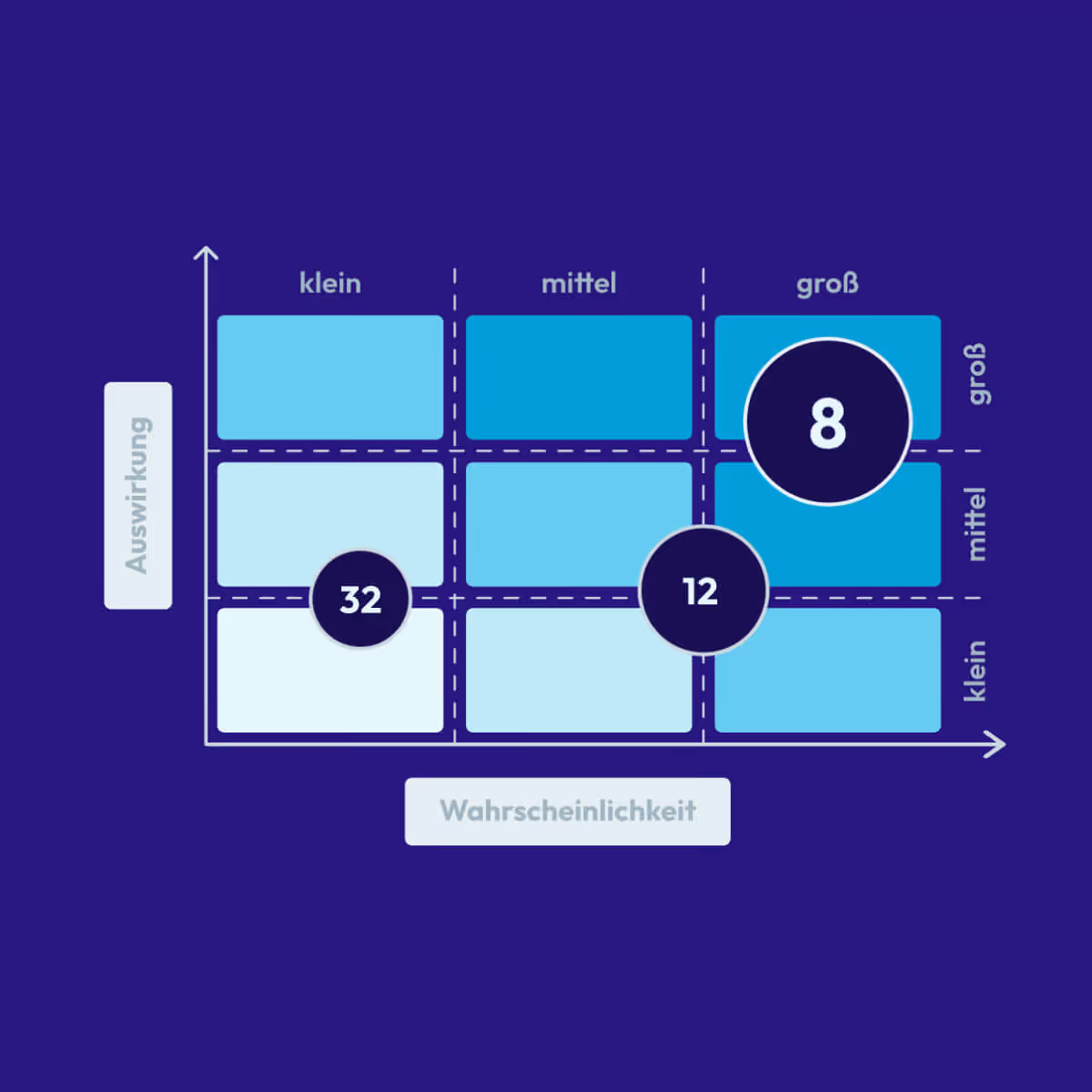












With Proliance 360, you conduct DPIAs flawlessly
Risk without structured DPIA
- Fines of up to €10 million or 2% of annual turnover
- Missing or incomplete DPIA documentation
- Unclear roles and responsibilities
- Time-consuming, unstructured implementation
- Uncertainty about whether a DPIA needs to be conducted
Benefits with Proliance 360
- Complete documentation – always audit-ready
- Guided process with legally compliant templates
- Clear roles and responsibilities
- Up to 70% time savings through digital workflows and assistance
- Integrated preliminary assessment clarifies DPIA necessity in advance
Does your company need a Data Protection Impact Assessment (DPIA)?
The GDPR requires companies to conduct a Data Protection Impact Assessment (DPIA) as soon as a planned data processing is likely to result in a high risk to the rights and freedoms of natural persons (Art. 35 para. 1 GDPR).


Especially relevant for:
- Companies using AI
- Healthcare
- HR & Recruiting
- Financial Services
- Companies with video surveillance
- Public Sector
Securely meet your DPIA obligations – without overburdening your Data Protection Officer





DPIA in Proliance 360 – structured, secure, time-saving






What 3.000+ Companies Value Most About Proliance












How the DSFA module works in Proliance's data protection software
The module guides you systematically through all steps of the risk assessment and Data Protection Impact Assessment – individually adapted to your input and the results of previous processing steps.
01 - Fact-finding
Define the distinguishable processing activity that is the subject of the investigation. The module provides targeted guiding questions:
- Which personal data is processed?
- What is the purpose of the processing?
- Which individuals are affected by the processing?
02 - Preliminary Check – Is a DPIA required?
The module checks whether a high risk is already to be assumed due to legal or supervisory requirements, and if a DPIA must be carried out in any case. This way, you avoid unnecessary extra work and don't overlook any obligation.
03 - Risk Assessment
Identify relevant risk factors and assess potential harm scenarios for data subjects – structured and guided by the module, with displayable legal background information.
04 - Data Protection Impact Assessment (only for high risk)
Identify relevant risk factors and assess potential harm scenarios for data subjects – structured and guided by the module, with displayable legal background information. If a high risk is identified based on the preliminary check or risk assessment, the module assists in identifying and documenting remedial measures.
05 - DPO Statement
The Data Protection Officer provides their opinion on the conducted risk assessment and, if applicable, DPIA directly within the module – GDPR-compliant and comprehensibly documented.
Meet GDPR requirements for Data Protection Impact Assessments with Proliance
Inquire now about a non-binding consultation
Additional data protection features that complement your DPIA
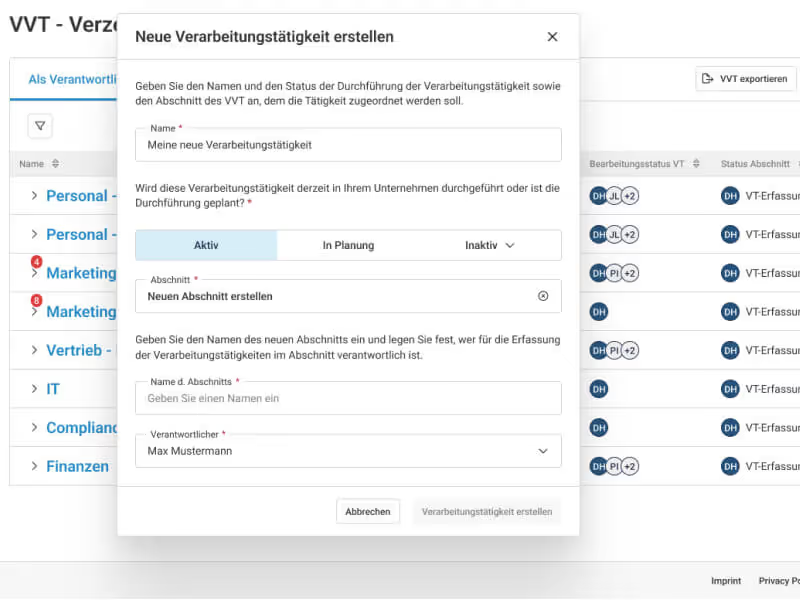
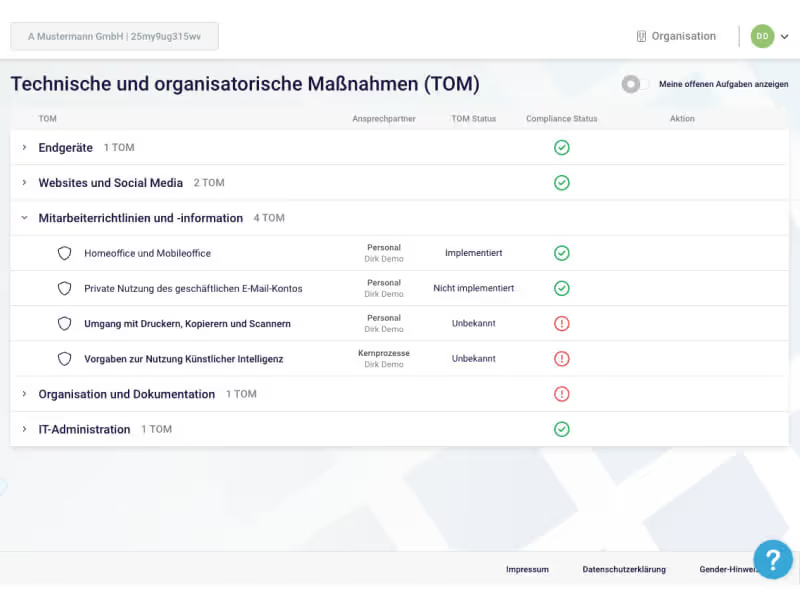
The DPIA is just one component of a comprehensive data protection management system. In Proliance 360, all modules integrate seamlessly.

Still have questions? We have the answers.
GDPR-related risk assessments enable companies to analyze potential threats to the rights and freedoms of a data subject that may arise from incorrect or faulty processing of personal data, and to take appropriate countermeasures. A risk assessment also helps determine whether a Data Protection Impact Assessment (DPIA) is required. In our magazine, you can learn more about DPIAs and how to conduct them.
A Data Protection Impact Assessment (DPIA) differs from a risk assessment as it is significantly more complex and extensive, and is only required for critical processing operations to assess the consequences of data processing. For example, companies must conduct a DPIA if, after a risk assessment has already been carried out, a high or very high risk to the rights and freedoms of data subjects remains.
The Data Protection Impact Assessment (DPIA) – also known as a DPIA or PIA (Privacy Impact Assessment) – is an enhanced risk assessment that must be conducted before certain, particularly high-risk data processing activities. It is mandated by Art. 35 GDPR and goes significantly beyond a simple risk analysis.
A DPIA is required when processing, due to its nature, scope, circumstances, and purposes, is likely to result in a high risk to the rights and freedoms of natural persons. Typical cases include: the use of AI and automated decision-making (e.g., profiling, credit scoring), large-scale processing of special categories of data (e.g., health data, biometric data), and video surveillance of publicly accessible areas. The positive lists of the German Data Protection Conference (DSK) provide additional guidance.
Where Article 35 GDPR applies, companies are formally required to carry out a DPIA. Infringements can result in fines of up to 10 million Euros or up to 2% of the global annual turnover, as well as reputational damage.
Responsibility lies with the data controller – meaning the person in the company who decides on the purposes and means of processing. The Data Protection Officer (DPO) is not automatically responsible but can be consulted in an advisory capacity. Proliance 360 assists with the clear assignment of roles and responsibilities.
Pursuant to Article 35(7) GDPR, a DPIA must include at least: a systematic description of the envisaged processing operations and their purposes, an assessment of the necessity and proportionality of the processing, an assessment of the risks to the rights and freedoms of data subjects, and the envisaged measures to address those risks. Proliance 360 ensures that all mandatory components are fully documented.
Proliance 360 guides you step-by-step through fact-finding, preliminary assessment, risk assessment, and – if a high risk is identified – the Data Protection Impact Assessment.