Data Breach Management: Software for Data Breaches










The Data Breach Software solves what others only manage


This is how the Data Breach Software supports you with data breaches when it matters
All relevant processed data – whether concerning individuals or policy sensitivity – assessments, and documentation content are centrally managed in our Data Breach Software. For early detection and correct classification of data incidents with intelligent input aids and clearly guided processes.
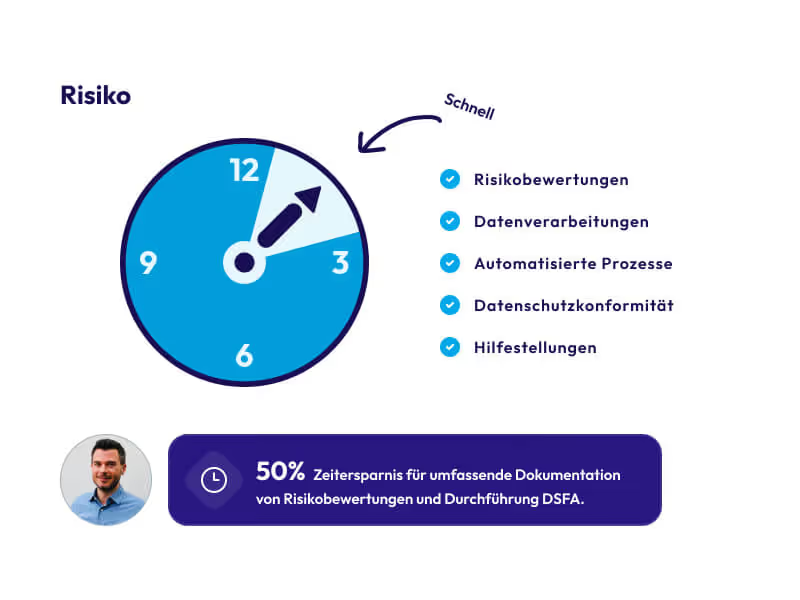
Easy Process
Predefined, intuitive workflows from evaluation to addressing data breaches, along with context-sensitive assistance, provide additional support. Users are guided step-by-step through targeted yes/no questions when recording the status quo.
Manage data privacy incidents with structured workflows instead of sifting through emails, spreadsheets, and checklists. Tasks, deadlines, and responsibilities are clearly defined.
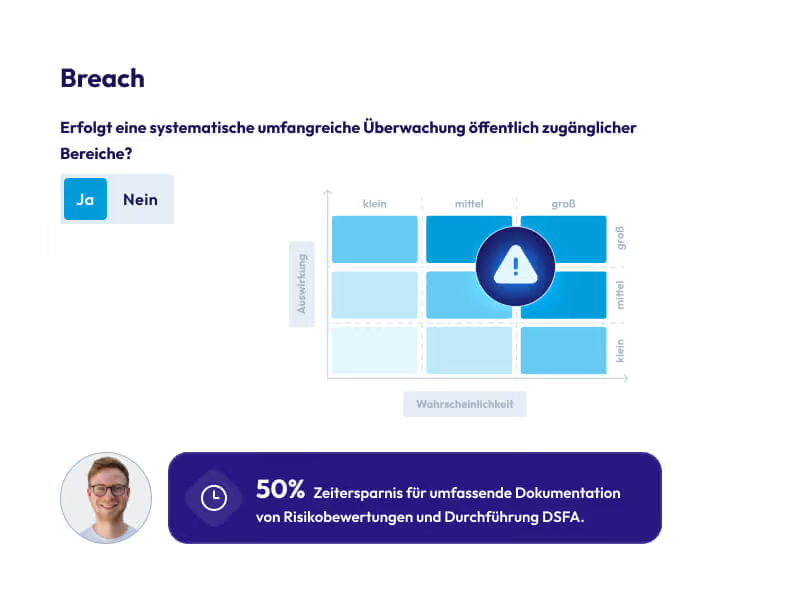
Efficient Execution
Users are guided through the recording and assessment of data privacy incidents with yes/no questions and contextual information. Depending on the incident's classification, the documentation questions automatically adapt. The Data Protection Officer is directly involved and informed of new incidents.
All steps are automatically documented in our data breach software, ensuring maximum transparency with supervisory authorities and audit readiness.
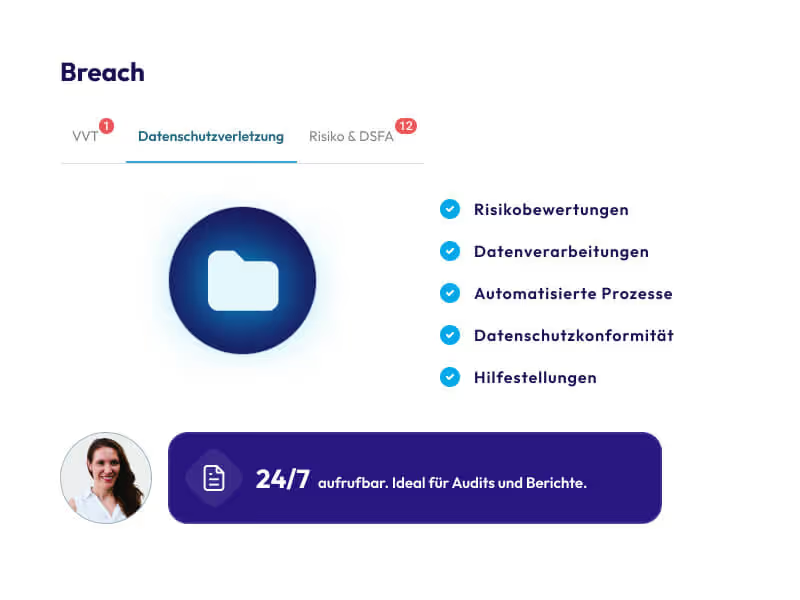
Transparent Documentation (all in one place)
From deadlines and actions to assessments: Every step is meticulously recorded. This ensures you can provide information immediately in case of an audit.
Proliance Data Breach Software: Efficient, Seamless Documentation


Together, we will find the right solution for your business
Our data protection software, Proliance 360, saves you measurable time and effort, making data protection management legally compliant and risk-free. Developed by data protection officers for internal data privacy managers. The following packages are available to you.
Still have questions? We have the answers
Requests from data subjects must be answered within one calendar month (maximum period). This period can only be extended for valid reasons. The deadline begins on the day the request is received. If a company fails to meet this deadline, individuals who have not received a response to their data subject request can contact their respective State Data Protection Authority.
All individuals whose personal data a company processes are considered data subjects. They can submit a data subject request. If you are unsure whether a company processes your personal data, you can also submit a data subject request to find out. If the company does not process any personal data about you, you will then receive a negative confirmation.
Typically, data subject requests are made in writing and should also be answered in this way – if necessary, after prior identity verification – so that companies have proof of processing the request. However, in principle, information could also be provided orally, if explicitly requested. A data subject request can be fulfilled orally provided the data subject's identity has been verified by other means and if this has been requested by the data subject (Art. 13 para. 1 sentence 3 GDPR). However, since there is no documentation of the response to the request for an oral disclosure (documentation and accountability obligation pursuant to Art. 5 para. 2 GDPR), it is advisable to avoid this form of disclosure.
If a company fails to respond to such a request, it is in breach of applicable law. This means the company can expect to face a warning or a fine. Affected individuals whose requests have gone unanswered can contact the data protection officer of their respective federal state.
The GDPR absolutely requires companies to actively inform individuals as soon as they process personal data. Therefore, data subjects whose personal data is processed must be actively informed of this fact. This also applies even when personal data is provided voluntarily (such as during an application process).
Responding to data subject requests is an obligation for companies under the GDPR. They must document their responses to these requests. Furthermore, if companies fail to respond to such data subject requests, data subjects can file a complaint with the competent supervisory authority.
Do you want to ensure data privacy as simply and efficiently as possible?