Automate your data processing agreements

All data is hosted exclusively on European servers—GDPR compliant and secure.

Certified information security to international standards—for maximum protection of your data.

Our team of experts supports you every step of the way—certified, experienced, and personally available.









The DPA & service provider solution from Proliance 360 is right for you if you...
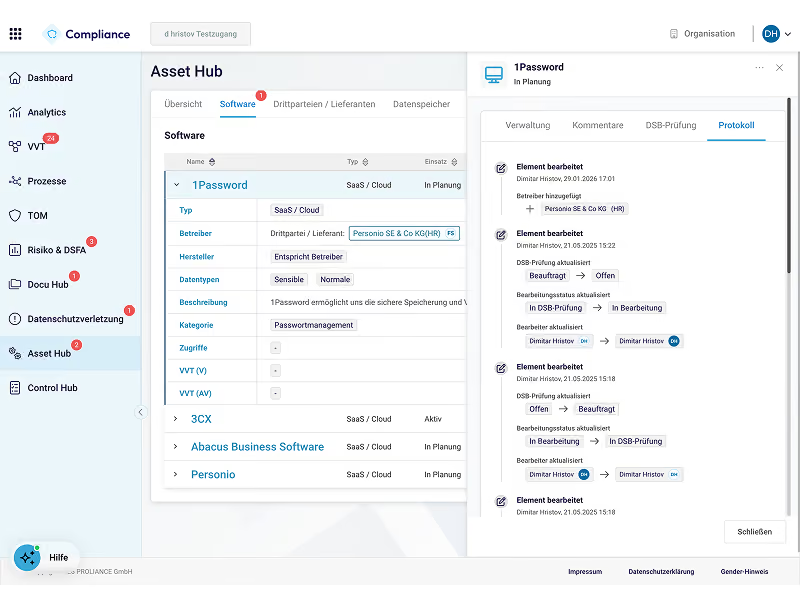

Why choose Proliance 360 for your DPA management?
See exactly what changes at a glance—less effort, better oversight, and full audit readiness.
Without Proliance 360
- DPAs scattered across email inboxes, folders, and Excel lists
- No overview of which service providers have a valid DPA – and which do not
- Audit stress: Searching for, compiling, and explaining documentation – under time pressure
- Outdated contracts: Changes to TOMs or sub-processors go unnoticed
- Redundant work: Each company manages DPAs separately
- Liability risk: Missing a DPA under Art. 28 GDPR can trigger fines of up to €10 million
With Proliance 360
- All DPAs centrally in one place - sorted by service provider, status, and expiration date
- Automatic reminders when a contract expires or needs to be updated
- Audit export at the push of a button - structured, complete, and ready immediately
- TOMs and risk classification stored directly with the service provider
- One platform for multiple companies - no duplicate effort
- Seamless documentation in accordance with Art. 28 GDPR - verifiable at any time
What are the typical assets you manage with Proliance 360?
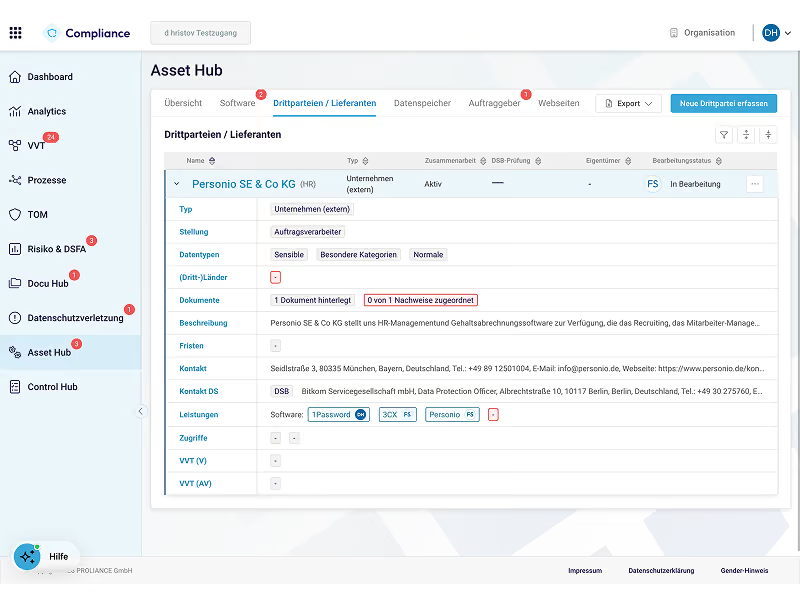
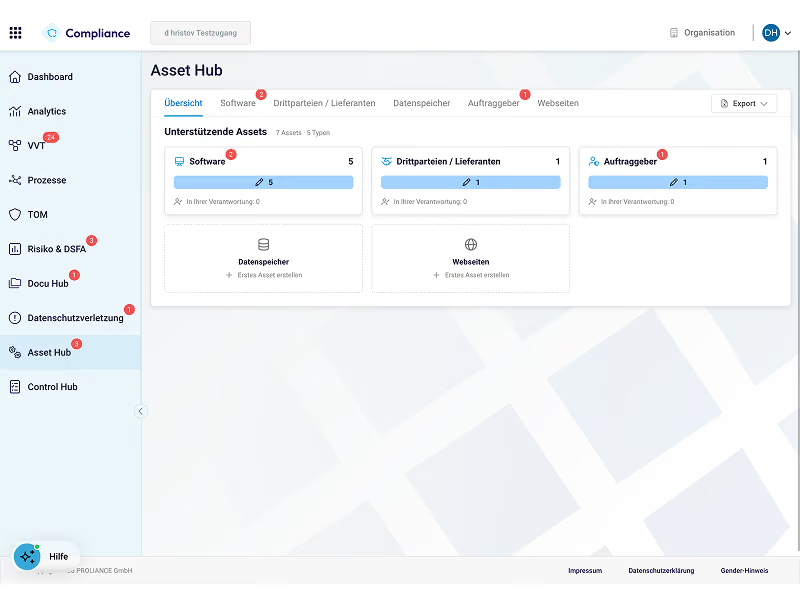
The Asset Hub in Proliance 360 captures all three categories of assets relevant to data protection—and links them directly to your DPAs, processes, and risk assessments.
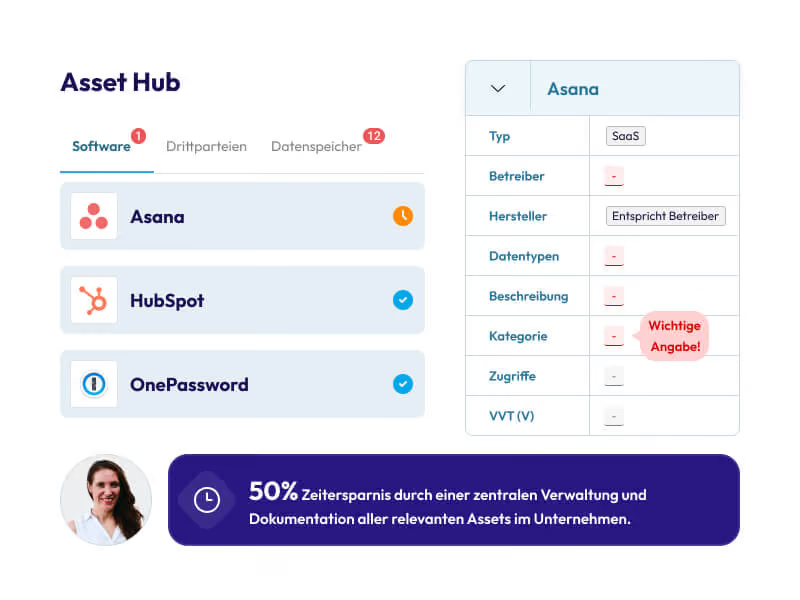
Which tools process personal data?
Who uses which software, for what purpose, and is a DPA required? The Asset Hub brings order to your IT landscape: record all tools that process personal data and document data types, usage context, and processor status in a GDPR-compliant manner—linked directly to processes and risk assessments.
Typical examples: CRM systems, HR software, email marketing tools, and cloud services like Google Workspace or Microsoft 365.
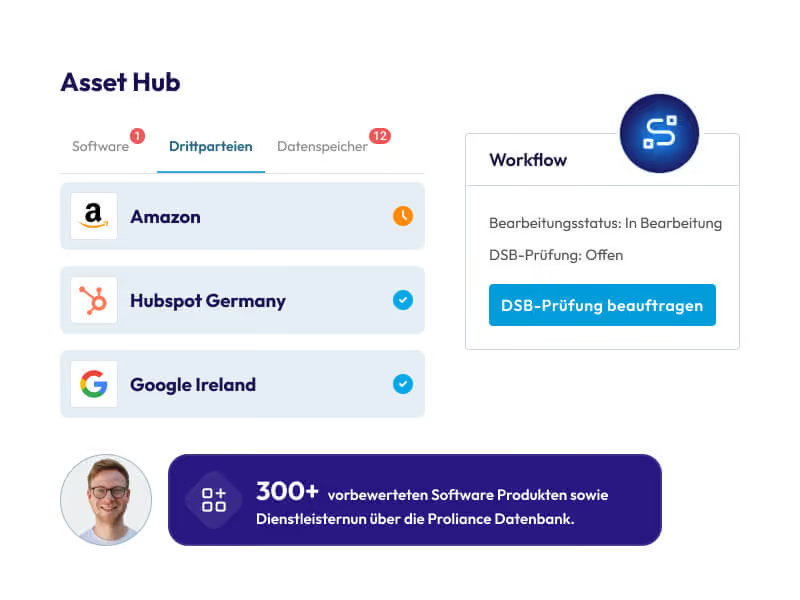
Who is involved in your data processes?
From freelancers and external service providers to affiliated companies: gain visibility into who has access to personal data. Centrally document roles, purposes, contracts, and DPA status for full transparency and compliance with data protection requirements under Article 28 of the GDPR.
Trackable types: freelancers, external companies, affiliated companies, public authorities.
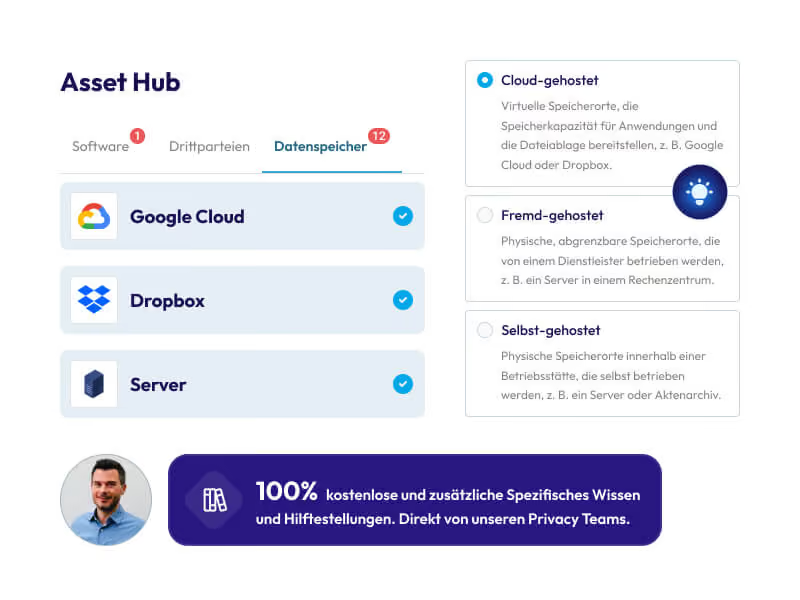
Where is personal data stored?
Local servers, external data centers, or cloud services: The Asset Hub shows you where data is stored, who operates it, and whether compliance requirements are met. Assign operators, purposes, and data types to each storage location—and know exactly what needs to be done.
Supported types: Self-operated data storage (e.g., in-house server rooms), 3rd-party hosted (e.g., Equinix, DigitalOcean), and cloud-hosted (e.g., AWS S3, Microsoft 365, Google Cloud Storage).

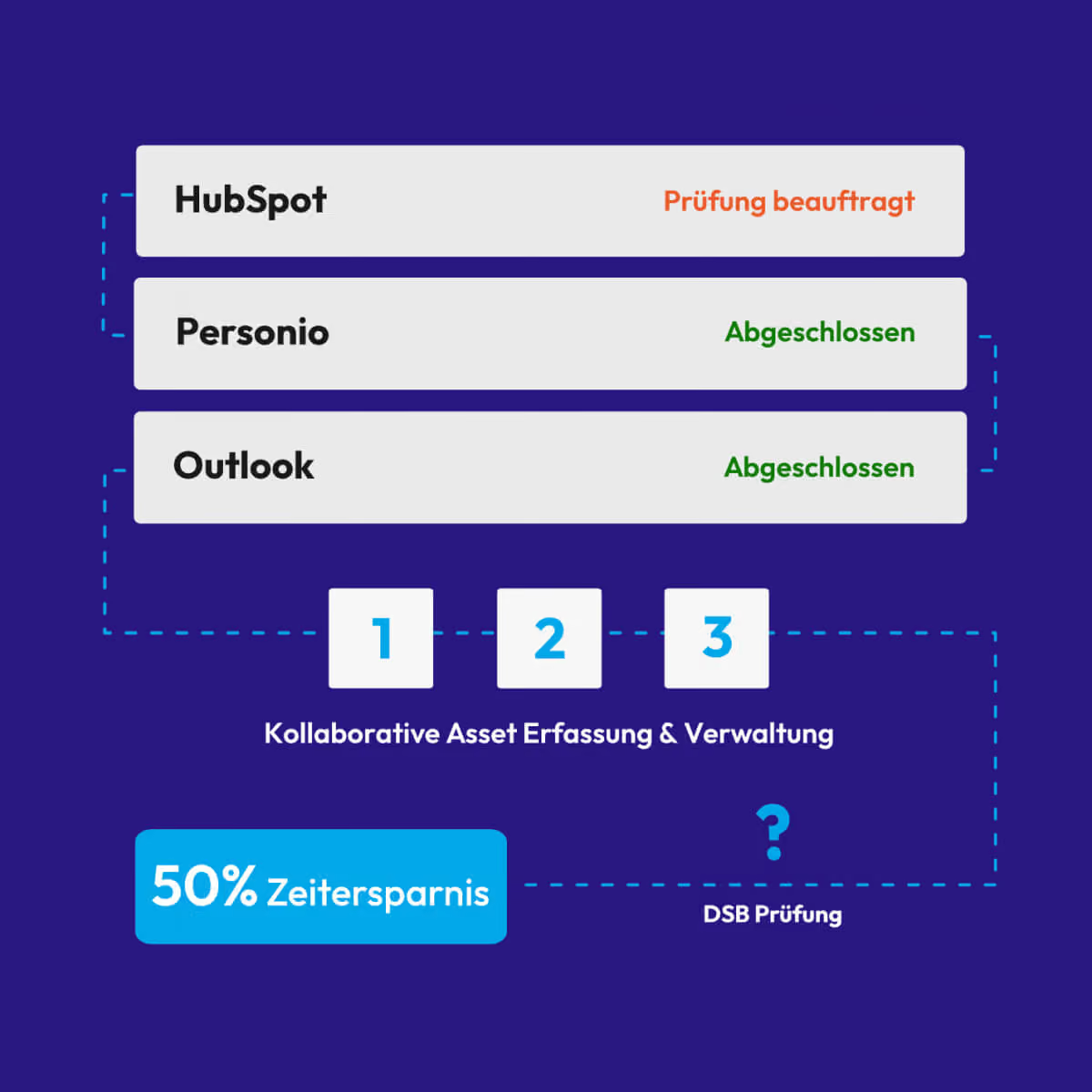
Proliance 360 includes a database of over 400 pre-filled assets from the most commonly used software providers and service providers—reducing your setup time by up to 50%. Once assets are recorded, they are reused across the entire platform: in DPAs, TOMs, and risk assessments.
How to manage data processing agreements with Proliance 360 - effortless and gap-free
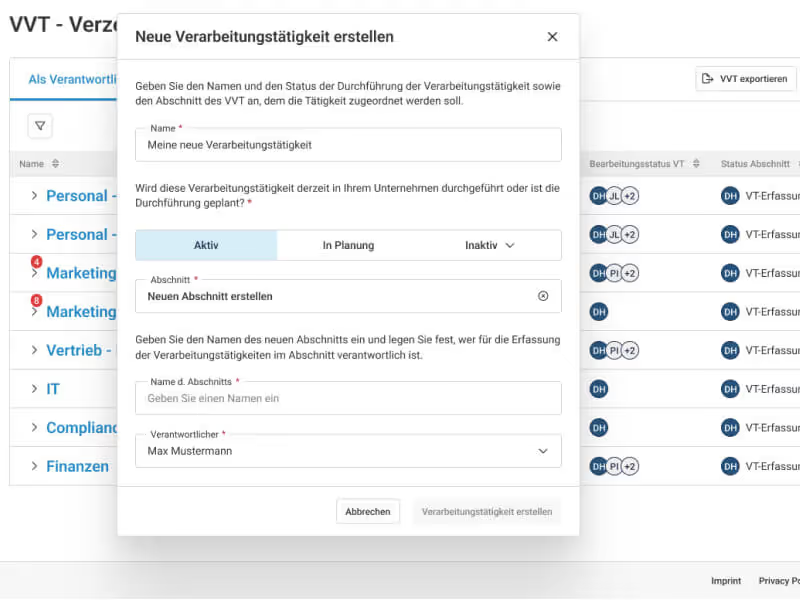
Proliance 360 brings all your data processing agreements and service providers into one central, structured overview. You can see at a glance what is in place, what is missing, and what needs to be renewed - and export documentation at the touch of a button.


Download free GDPR data processing agreement template
Nutzen Sie unser praxiserprobtes Standard-Muster für Ihre Dienstleister als ideale rechtliche Basis nach Art. 28 DSGVO.
Three steps to seamless data processing agreement management


Plans & Pricing – let's find the right solution together
Proliance 360 is available in two plans. Both include the Asset Hub with data processing agreement (DPA) management, service provider management, and data storage documentation.
98% satisfaction: Over 3,000 companies have trusted Proliance since 2017








DPA software not enough? No problem: Proliance is here to support you personally.
Personal data protection expertise for consulting, external DPO support, and audits – tailored to your needs.


Ready to automate your data processing agreement management?





Frequently asked questions about compliance management software
Recording all deployed software solutions offers numerous benefits and is necessary for the following reasons:
- Overview of Software in Use: Centralized recording provides us with a complete overview of all software solutions used within the company.
- Connection to Third Parties: This documentation allows us to directly link the software in use with third-party providers, thereby better managing dependencies and potential risks.
- Identification of Data Protection-Relevant Software: We can identify data privacy-critical applications and implement appropriate measures to comply with GDPR.
- AI Tool Overview: Recording helps identify AI-powered software and ensures compliance with internal and external guidelines for the use of Artificial Intelligence.
- Connection with Processes: Each software can be linked to specific business processes to create a transparent overview of its areas of application and relevance in the workflow.
The recording of Third Parties helps to increase transparency regarding parties involved in data processes and ensures that data protection requirements are met. Third parties are often crucial for the operation and management of software, access to data storage, and other processes.
Types of Third Parties:
The following types of third parties can be recorded in the platform:
- Freelancers: Individuals who work as external specialists and may have access to certain data or systems.
- Companies: External companies that provide services to our company and act as data processors or recipients.
- Affiliated Companies: Organizations affiliated with Proliance that may share data as part of the business relationship.
- Public Authorities: Authorities or government institutions that may receive or have access to data.
Inventorying data storage in the Asset Hub is a central component of our information management. This overview allows for documenting all relevant data storage to ensure transparency and compliance in handling sensitive data.
Types of Data Storage in the Asset Hub:
- Self-Operated Data Storage
- Definition: This type of data storage is operated by the company itself.
- Association: This involves specifying or associating with a specific facility where the data storage is physically located.
- Examples: Local server rooms, company-owned data centers.
- 3rd-Party Hosted Data Storage
- Definition: Data storage hosted by a third party. The company contracts an external provider who supplies the infrastructure.
- Usage: This option is used, for example, when servers are rented from a data center provider.
- Examples: Data storage with data center providers such as Equinix or DigitalOcean.
- Cloud-Hosted Data Storage
- Definition: Fully managed cloud services where the company stores and manages data with a cloud provider.
- Usage: These services involve the provider fully managing both the hardware and software environment.
- Examples: AWS S3, Microsoft 365, Google Cloud Storage.
The Proliance database is an optional feature of our data privacy management platform, not included in smaller packages. This feature allows companies to significantly reduce their effort in collecting and managing assets and to work more efficiently by using pre-filled entries.
Benefits of the Asset Database:
- Pre-filled Assets: The database contains over 400+ of the most commonly used assets, which are continuously maintained and developed by us. This allows users to directly adopt common software and service entries without manually filling them out. Important: Especially for "third parties," additions and individual adjustments to the entries are necessary; however, the effort for this is significantly less than for a completely manual new creation.
- Save Effort: By using pre-filled entries, companies can save time, as the most important information about the assets is already available.
- Proliance Assistant: The Proliance Assistant offers specific help and information for each asset and its associated questions, which supports the data collection process and reduces uncertainties.
With the new Asset Hub module in Proliance 360, we address key challenges that our customers face in managing their service providers, software, and data storage. Here are the core problems that Asset Hub solves:
1. Lack of Transparency
Many companies lack a complete overview of the software they use, their service providers, or data storage. This lack of transparency can lead to risks, particularly in data protection and compliance. With the new Asset Hub module, Proliance offers a central digital solution that provides a comprehensive and up-to-date list of all assets. This ensures companies always have an overview of all relevant information and can easily access it.
2. Redundant Asset Capture
The new module eliminates these redundancies and enables a standardized, central capture of assets, making the process significantly more efficient. Once assets are captured, they can be reused across different areas of the platform without requiring re-entry.
3. Lack of Overview of Asset Usage in Processes
The new module brings transparency to these areas by providing a clear link between assets and the processes in which they are used. This allows companies to easily track which assets are used in critical processes and take appropriate risk mitigation measures.
4. Inability to Delete Items
With the new Asset Management module, companies can now efficiently archive or delete assets that are no longer needed, contributing to better data maintenance and clarity.
5. Lack of Audit Documentation
The new module closes this gap by enabling comprehensive audit documentation. This makes it easier for companies to document reviews and controls in an audit-proof manner and access them at any time if required.
6. Capture of Planned Software and Service Providers During Evaluation Phase
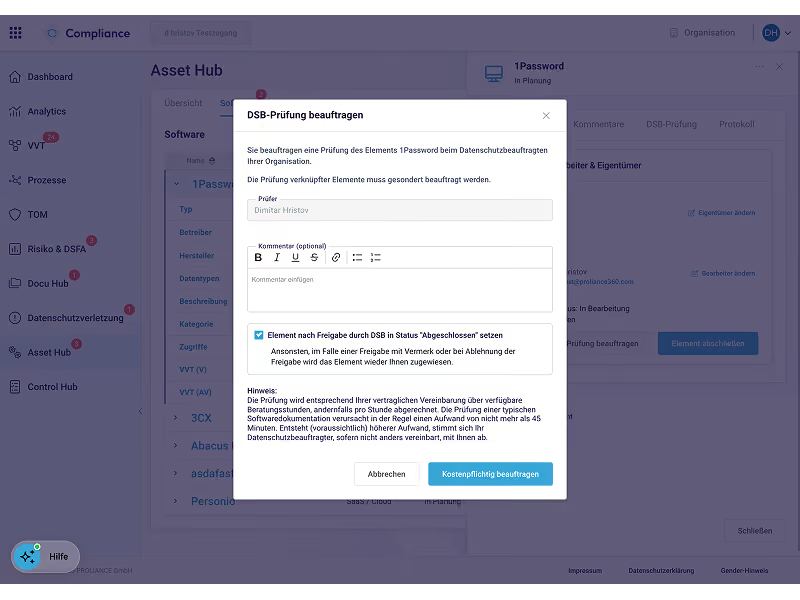
With the new module, planned software and service providers can be captured during the evaluation or review phase and submitted to the Data Protection Officer (DPO) for review. This simplifies compliance checks and saves valuable time, as companies can provide relevant information early on.
7. Reduced Data Entry Effort via the Proliance Database
The integrated Proliance database significantly simplifies asset capture for users by providing pre-filled content. This reduces manual effort for data entry and saves time, as relevant information is pre-configured and immediately available. Customers thus benefit from faster and more accurate data capture.