AI Compliance Consulting for Businesses - Ensuring Legal Compliance with the EU AI Act
The EU AI Act is in effect—with the first obligations taking effect in February 2025. We can help you implement AI compliance in a structured, pragmatic, and sustainable manner.


One AI use case, all requirements addressed – the AI Act, GDPR, and NIS-2 all apply at once. We handle all three from a single source

Practical solutions for SMEs – no theoretical concepts, just actionable strategies with clear results

More than 3.000 companies already trust Proliance with their compliance







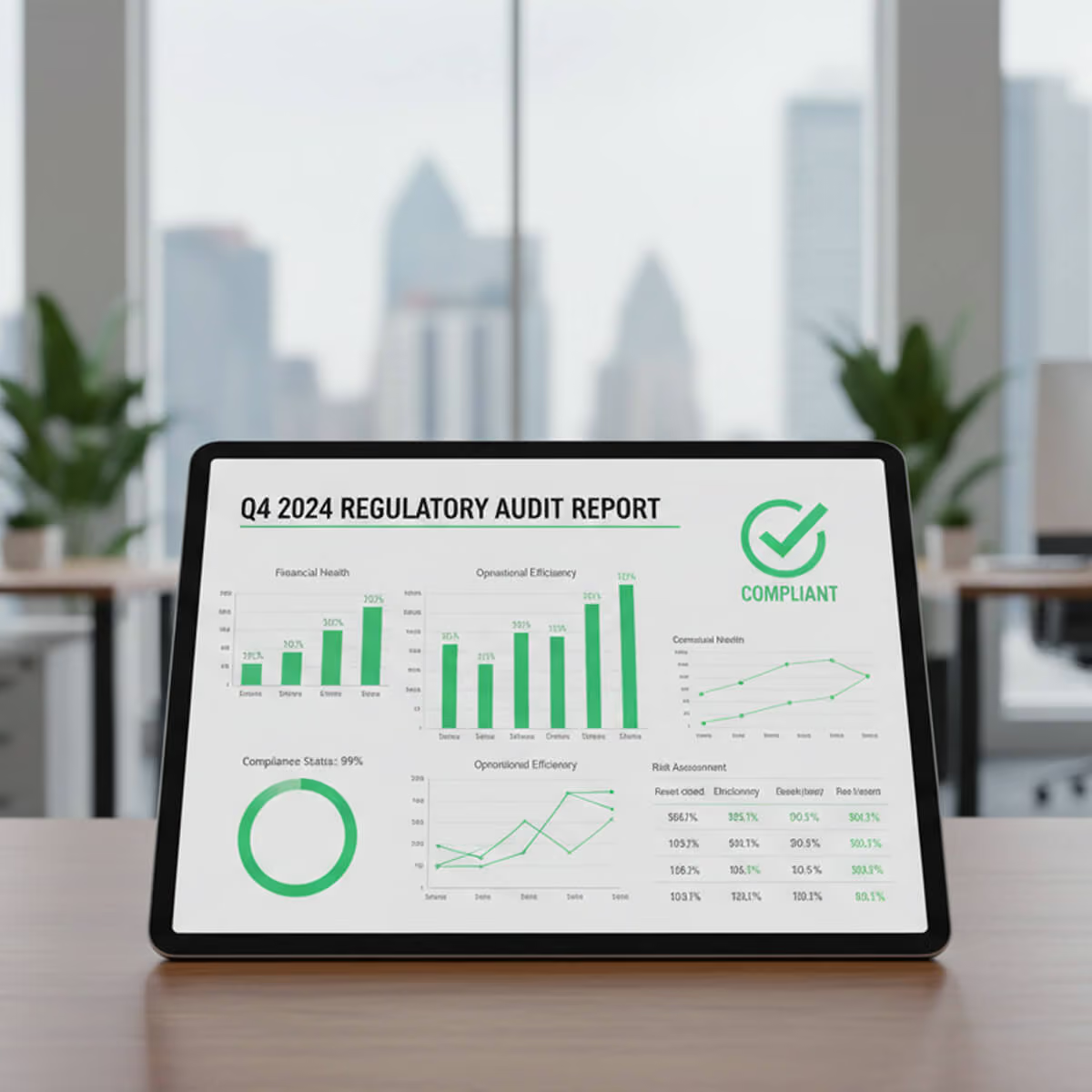
What does AI compliance mean for your company?
AI compliance refers to the entirety of all legal, organizational, and technical measures that ensure the use of artificial intelligence within a company meets applicable requirements—specifically the EU AI Act, the GDPR, and other regulations such as NIS-2 and the Cyber Resilience Act. In concrete terms, AI compliance means the following for your company:

Risk classification
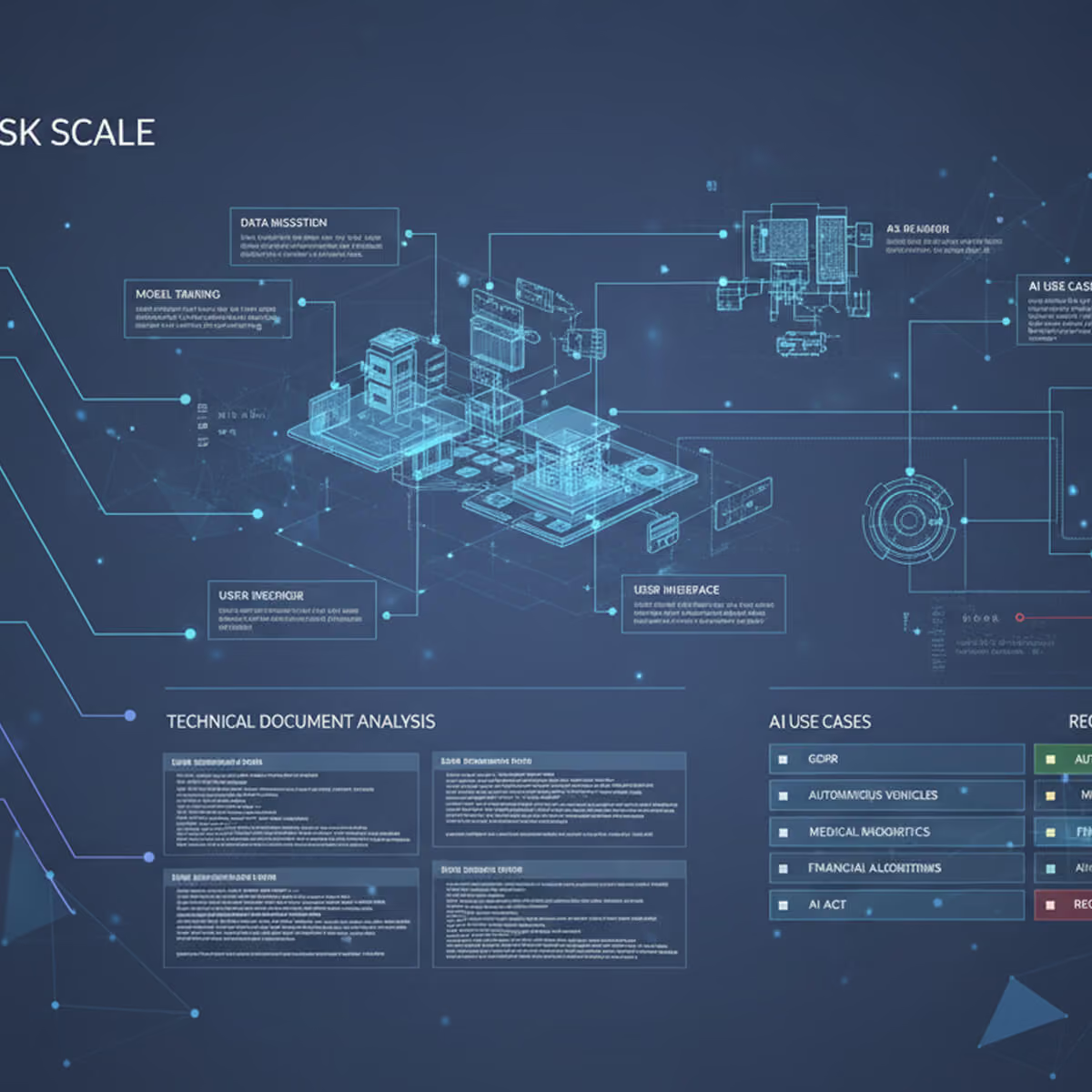
Under the EU AI Act, every AI system must be assigned to a risk category (minimal, limited, high, or unacceptable). This risk category determines the applicable obligations, ranging from basic transparency requirements to a full conformity assessment.

GDPR Compliance
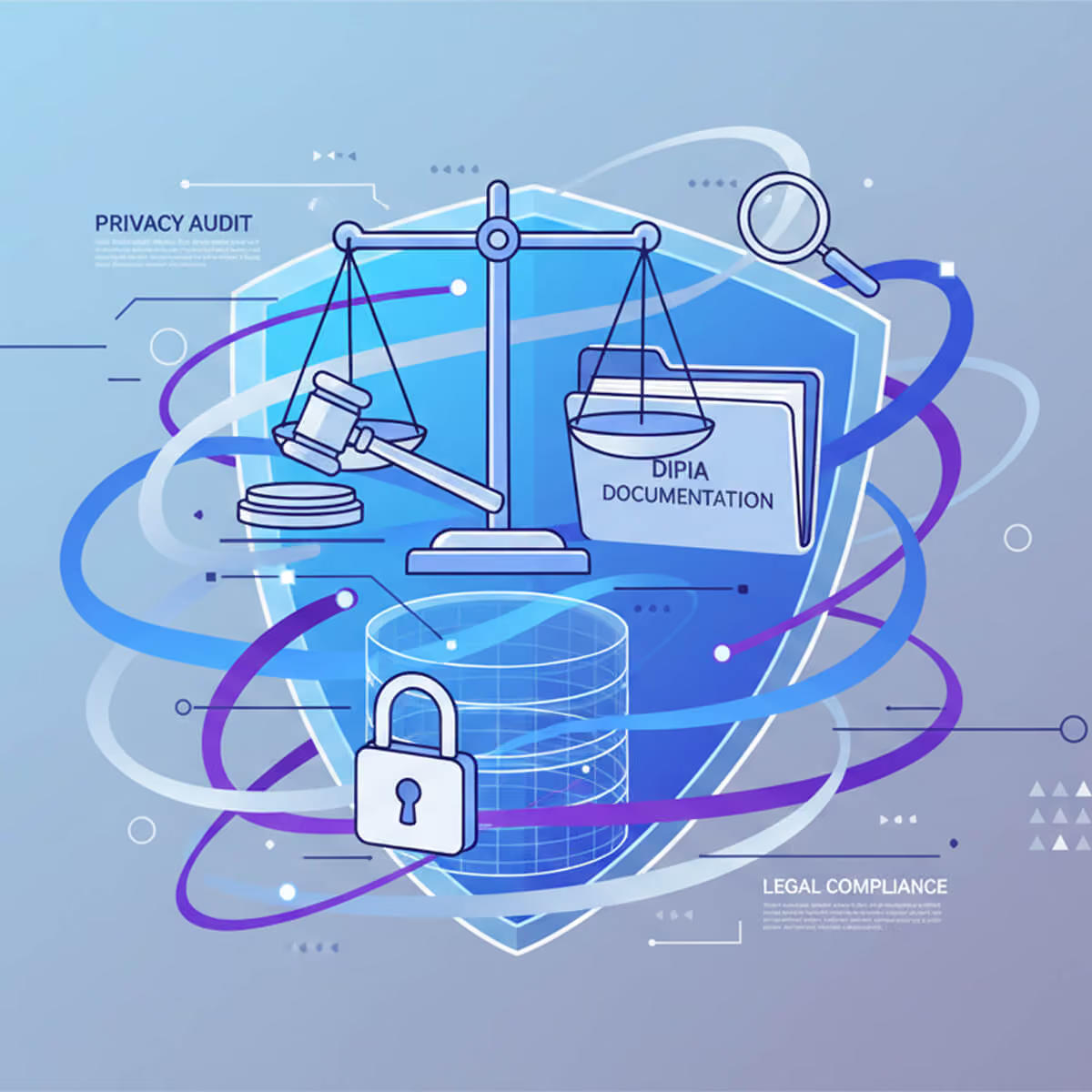
AI systems that process personal data are also subject to the requirements of the GDPR, including Data Protection Impact Assessments (DPIA). The AI Act and the GDPR are interconnected and must be considered in tandem.

AI Governance
Companies need clear guidelines, roles, and processes for the responsible use of AI – documented in a company-wide AI policy and an AI register.

Transparency & documentation requirements
Depending on the risk class, labeling, technical documentation, and user information are mandatory. For high-risk AI, there is an additional requirement to register in the EU database.

Continuous monitoring
AI compliance is not a one-time project, but an ongoing process. AI systems must be regularly checked for conformity – especially when functions or areas of application change.

Operational and security-related risk: Regardless of the law, AI poses real business risks – poor decision-making, data leaks, and unauthorized data access. Anyone using AI must systematically assess and monitor these risks. Not as a compliance obligation, but as a matter of corporate responsibility.
Legal risk: Violations of the EU AI Act can result in fines of up to 15 million euros or 3% of total worldwide annual turnover.
AI compliance is not a future concern—the obligations apply now
Many companies underestimate the extent to which the EU AI Act already applies. More than 160,000 SMEs in Germany are directly affected by the requirements of the AI Regulation—and most are not yet prepared.
AI Act Timeline: When do the new rules apply?
The three biggest AI challenges for SMEs

Regulatory complexity
The AI Act, GDPR, NIS-2, and the Cyber Resilience Act apply simultaneously and overlap. Without an integrated approach, gaps—and liability risks—are inevitable.
Risk classification
67% of companies using AI lack comprehensive governance. Correctly categorizing AI systems into risk classes is complex and prone to error—especially without legal expertise.

Lack of internal resources
65% of German SMEs lack internal compliance capacity for AI. The responsibility often falls through the cracks between IT, legal, and management—all of whom are already at full capacity.
AI compliance consulting from Proliance – what we do for you
Our AI compliance consulting is the only approach on the market that covers the AI Act, GDPR, and NIS-2 from a single source – without you having to coordinate multiple service providers.


What 3.000+ Companies Value Most About Proliance











AI compliance consulting – three packages for every need
Proliance offers AI compliance consulting in three tiers, depending on the complexity of your AI usage and your governance requirements.
Services:
- Risk classification
- Action plan
- AI policy template
- Basic training

Services:
- All basic services
- Ongoing consulting
- Governance processes
- AI registry, DPIA

Services:
- Full external AI compliance responsibility
- Operational support
- Custom documentation
Your contacts for AI compliance
Our interdisciplinary team of attorneys, data protection officers, AI governance professionals, and information security officers will guide you through the entire AI compliance process. We speak your language and understand the challenges faced by small and medium-sized businesses.





Why Proliance is the right partner for AI compliance
We are already there for you. Over 3,000 companies trust Proliance for data protection, information security, and AI compliance.


Frequently Asked Questions About the EU AI Act
We support you from initial assessment through to ongoing operations. Our consulting is practical and tailored to your company. Typically, our AI Act consulting includes steps such as:
- Creation of AI and use case documentation
- Risk classification
- Gap analysis between current processes and AI Act requirements
- Establishment or adaptation of governance, documentation, and evidence concepts
- Continuous monitoring and optimization for sustained compliance
- Creation of a training concept
- Operationalization of GDPR and AI Act requirements
Yes, an assessment may also be required when using generative AI systems like ChatGPT: for example, to understand which risk class your use as an "AI system" falls into under the regulation, what obligations arise from it, and how to legally organize inputs, outputs, and operational processes. Your specific use within the company is crucial. Regardless of the risk class, all organizations using AI have the obligation to train their employees on AI use.
A high-risk AI system is one where AI can typically have significant impacts on safety, the economy, or interests protected by fundamental rights, and therefore must meet particularly stringent requirements. This is generally the case when vulnerable groups such as minors, pupils, students, employees, applicants, or consumers are affected by the AI system. Required obligations include risk management, technical documentation, data basis requirements, transparency, and human oversight obligations.
This particularly affects companies that develop, place on the market, put into service, or use AI systems as operators or users in the EU. The requirements also apply even if the AI is 'only' used in business processes. The determining factor is the role the organization plays and the risk class into which the AI system is categorized.
The EU AI Act (Artificial Intelligence Regulation, EU 2024/1689) establishes a uniform legal framework for the development, placing on the market, putting into service, and use of AI systems in the EU. It sets out obligations based on risk: from prohibited practices and transparency requirements to strict requirements for high-risk AI.