Microcensus & Data Protection: What You Need to Know About the Survey
- Microcensus: Annual survey of 1% of German households regarding living conditions.
- Participation is mandatory, refusal is not possible, and fines apply for providing false information.
- The survey serves as a basis for political decisions, and data is anonymized.
- Questions cover household, living situation, occupation, income, and internet usage.
- Conducted via paper, online, or interview, with data protection in accordance with GDPR.
Every year, approximately 1% of German households are selected to participate in the microcensus and provide information about various aspects of their lives. This is essentially a type of population census, which collects important personal data to serve as a basis for political decision-making. However, there is much more behind these seemingly random letters than meets the eye—and it is well worth participating conscientiously.
What is the microcensus?
Translated, "microcensus" roughly means "small population census." The opposite of the microcensus is the census or macrocensus, which is a large-scale population count. The microcensus is primarily characterized by the following features:
- The microcensus is an official survey of private households.
- More specifically, the microcensus is a statistical survey conducted by the federal and state statistical offices at relatively short intervals (once a year).
- Each year, 1% of German households are required to participate in the survey—usually, these are contiguous residential complexes or houses selected through a mathematical-statistical random sampling procedure.
- The survey (microcensus) applies to both the old and the young—the goal is to obtain the most comprehensive picture possible of all segments of the population.
- Participation in the microcensus is mandatory: if only people from a certain social stratum or a specific region were to participate, it would bias the survey results.
- The mandatory nature of the microcensus applies to all surveys: some households are interviewed up to four times at specific intervals in order to track potential changes over time.
- The goal of the microcensus questionnaire is to gain insight into the economic and social situation of the population. Data on demographic structure is also obtained from this microcensus survey.
- Specifically, the questionnaires cover topics such as household size, living situation, childcare, job and employment search, school, university, vocational training, income, and internet usage.
- The microcensus serves statistical purposes: the goal is to have a solid foundation upon which political decisions can be made. For example, it aims to determine how professional life can be improved for people with children or what kind of assistance would truly support people from socially disadvantaged backgrounds.
Are you up to date on data protection regulations?
Data protection is a topic you encounter time and again in everyday situations. To act correctly, it is important to always stay up to date. We are happy to support you with this.
Data protection concerns regarding the microcensus
If you are surprised by the questions asked in the microcensus because this data is already known elsewhere, you are right: financial data, for example, could also be found at banks, but this is, of course, subject to strict data protection. If the state wants to obtain information about such matters, it must collect the corresponding data directly from you as part of a microcensus survey. And don't worry: conversely, the information provided in the microcensus may not simply be passed on to authorities or institutions.
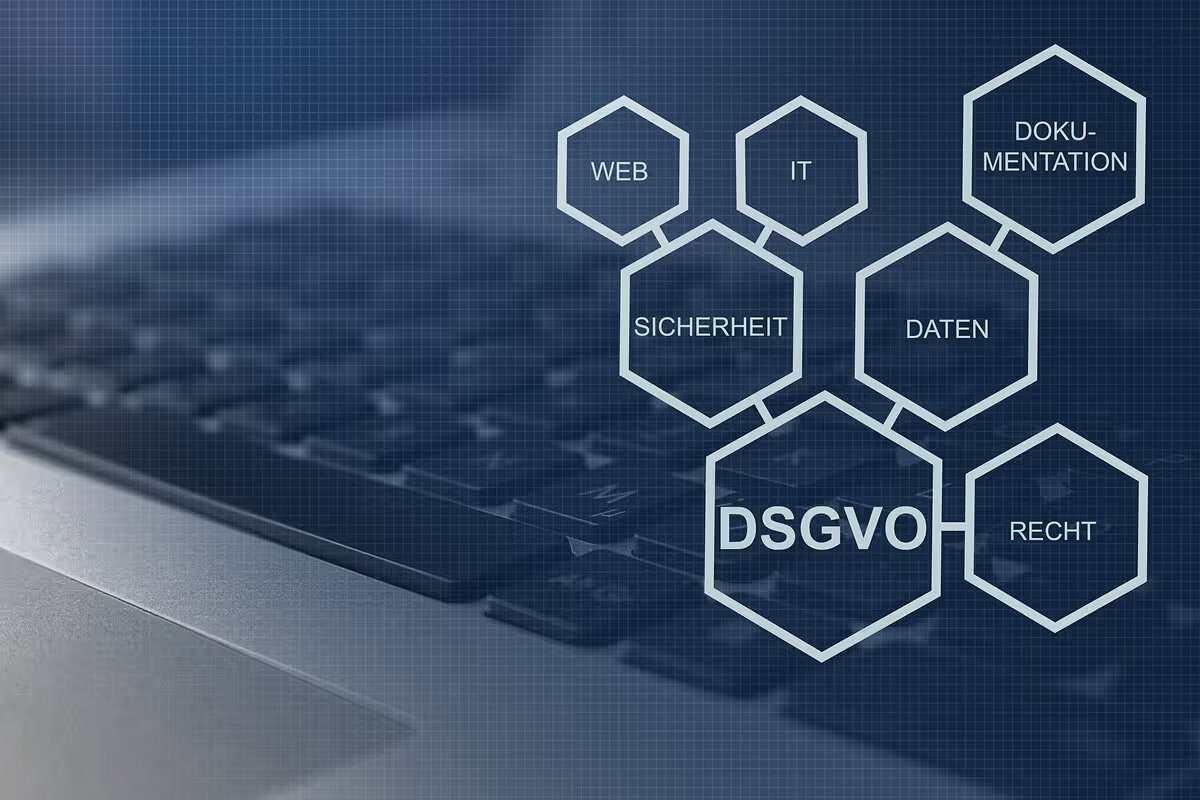
Incidentally, the microcensus is also subject to the GDPR: since personal data is collected here, it must be handled with strict confidentiality. The answers you provide in the microcensus are anonymized so that they can no longer be traced back to the respondents.
Legal regulations for the microcensus
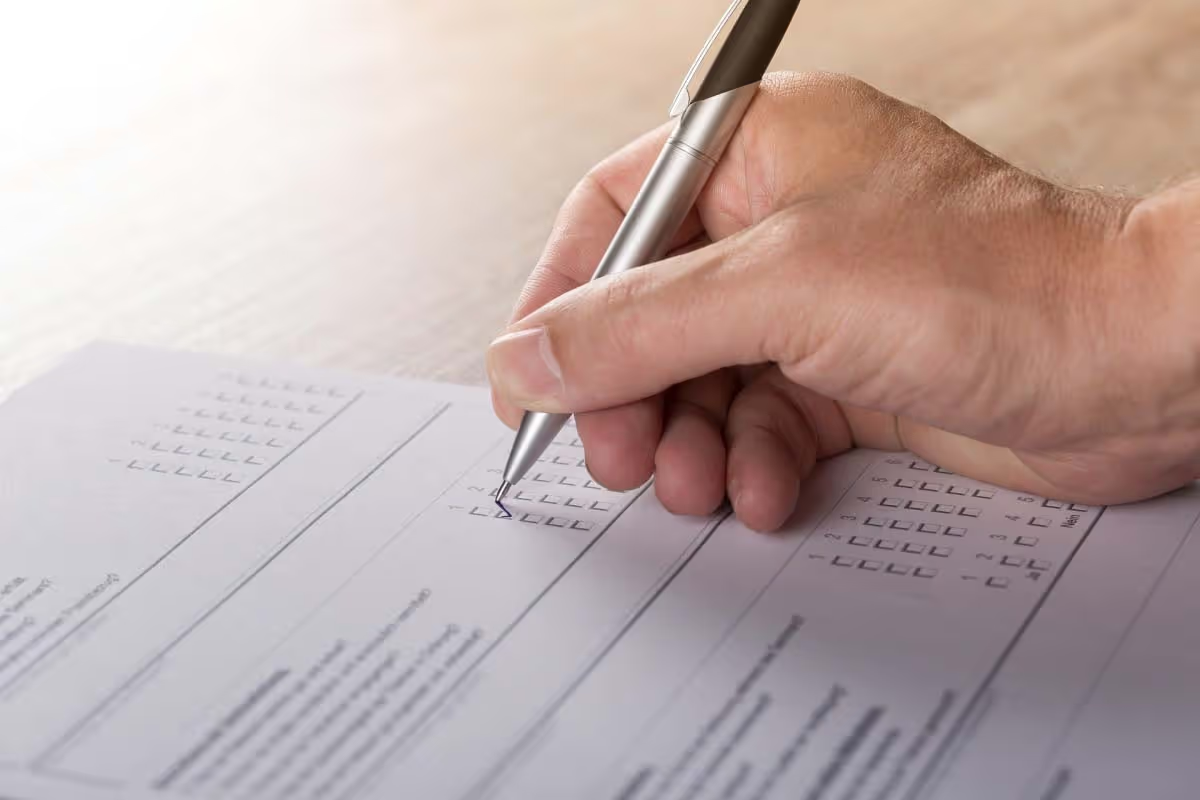
As mentioned at the beginning, there is a mandatory microcensus or obligation to provide information. If you have been selected to participate, you must do so—you cannot refuse or decline the microcensus. However, how you participate is up to you. You can choose between:
- A paper questionnaire,
- an online survey, or
- a microcensus interview with the help of an interviewer.
If it can be proven that you provided false information in the microcensus, you are in violation of the mandatory disclosure requirement, which may result in administrative or criminal proceedingspursuant to Section 13 of the Microcensus Act in conjunction with Section 15 of the Federal Statistics Act (BStatG). The reasoning behind this is clear: your responses are representative of many other citizens, as they are extrapolated to the entire population after analysis. The more honestly you answer the questionnaires, the more accurately policymakers can respond to these official statistics.
If you were not selected for the microcensus but are curious about what such a questionnaire looks like, you can view a sample microcensus questionnaire from the Bavarian State Office for Statistics. You can also view the latest results of the microcensus survey online at the Federal Statistical Office.
Do you have further questions on this topic? Our experts will be happy to advise you free of charge.