ISO 27001 IT Risk Analysis: Foundation for a Robust ISMS and Effective Cyber Defense
- Structured IT Risk Analysis: ISO 27001 helps systematically identify and assess threats to confidentiality, integrity, and availability.
- 5-step approach: Define context, identify, assess, treat, and continuously monitor risks – connectable to Annex A and SoA.
- Risk Treatment: Avoid, reduce, accept, or transfer risks – according to clear risk acceptance criteria.
- Practice over Theory: Templates, clear responsibilities, and cross-departmental collaboration accelerate implementation.
- Increased Security and Compliance: An ISO 27001 risk analysis protects against cyberattacks, reduces IT risks, and supports compliance with GDPR and NIS2.
Companies that want to clearly signal to their customers and partners that they prioritize information security, can get certified according to ISO 27001. The international standard contains all requirements for the establishment of an Information Security Management System (ISMS), which data and information protects within the organization.
A prerequisite for an ISO 27001 certification: Companies must know their risks and how to manage them. One of the first steps on the path to ISO certification and establishing an ISMS is therefore the ISO 27001 risk analysis.
What is an ISO 27001 risk analysis?
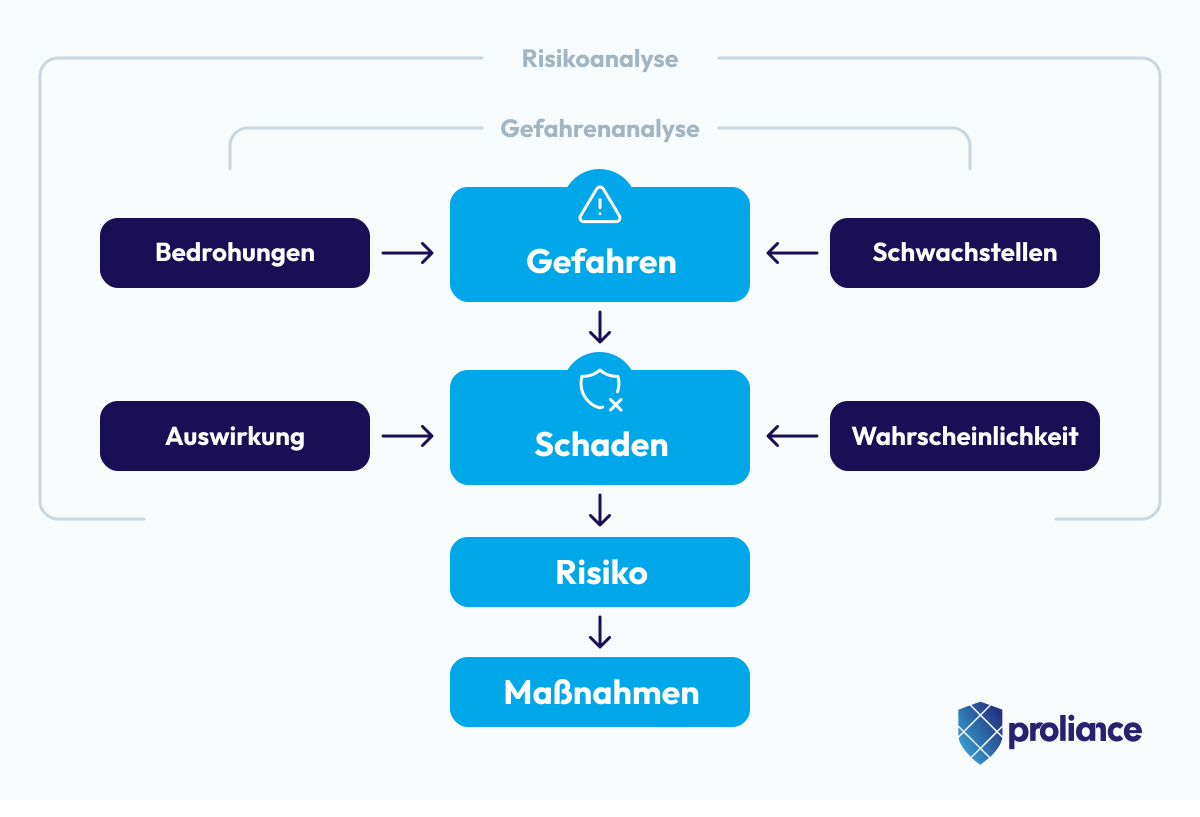
The ISO risk assessment is a structured process, through which organizations identify, assess, and treat risks to the confidentiality, integrity, and availability of their information. It is the foundation and a core component of an ISMS.
The goal of the analysis is to reduce risks to an acceptable level and to justify measures transparently. The standard clearly distinguishes between two tasks:
- Risk Assessment: What threats exist, how likely are they, and what impact would they have? Result: prioritized risk list.
- Risk Treatment: What strategy do you choose for each risk (avoid, reduce, accept, transfer) and what controls do you implement? Result: action plan and Statement of Applicability (SoA).
Practical example of ISO risk assessment
A medium-sized healthcare company can use an ISO risk analysis to identify, prioritize, and address vulnerabilities in IT systems and cloud workloads with appropriate controls. This enables it to prevent data breaches and reliably meet compliance requirements.
What is the difference between ISO risk analysis and risk analysis according to BSI Standard 200-3?
A risk analysis can be based on ISO/IEC 27001 or the IT-Grundschutz (IT Baseline Protection) of the BSI . ISO 27001 provides the foundation for an internationally recognized, certifiable, and robust ISMS and contains in Annex A a collection of security measures. Additionally, the SoA describes which of these measures are relevant for the respective company and why.
ISO certification is particularly useful for internationally operating companies , while the BSI Standard 200-3 is primarily relevant when authorities or organizations in Germany establish an ISMS according to the IT-Grundschutz Compendium or require a corresponding BSI certification.
Why is an ISO risk assessment important?
Digital networking, cloud usage, and supply chain dependencies increase the risk of security incidents. An ISO-compliant risk analysis ensures that resources are directed towards truly critical risks. Controls are selected based on risk, justified in the SoA, and auditable. This way, you align information security, compliance, and cost-effectiveness.

Find critical gaps before they slow down your ISMS progress. Proliance’s gap analysis helps you identify weaknesses systematically, prioritize the right actions, and move toward stronger information security with clarity and confidence.
5 Steps for Conducting an ISO 27001 Risk Analysis
The ISO/IEC 27001 standard provides a clear framework for information security risk analysis. In practice, a lean 5-step approach has proven effective.
Step 1: Define Context and Scope
The ISO 27001 IT risk analysis begins with defining the context. This means you must internal and external factors consider that could influence your information security:
- Examples of internal factors: organizational structure, existing IT systems, handling of sensitive data
- Examples of external factors: regulatory requirements, industry-specific threats
Another important aspect is defining the scope of your ISMS: Which systems, data, and processes should be covered by the analysis? A clearly defined scope facilitates the subsequent analysis and ensures that all relevant aspects are considered.
Example for context definition: A company develops software solutions for the financial sector and must comply with strict legal requirements and data protection regulations. It relies on collaboration with external Cloud providers relies on them and competes with other software developers. An effective risk management strategy must consider both internal resources and external threats and requirements to ensure information security.
Step 2: Identify Risks
Once you have defined your context, the next step is the systematic identification of potential risks. This requires gathering information about possible threats and vulnerabilities, for example, with the help of standardized templates. This ensures you don't overlook any important aspect.
Typical Risks include, for example,
- cyberattacks by hackers,
- data loss due to technical defects or
- human error.
List all potential threats and link them to affected systems or processes to get an overview of your risks . Risk identification requires close collaboration between different departments: IT teams are able to uncover technical vulnerabilities, while management is informed about potential organizational risks.
Step 3: Assess Risks
For each risk, assess likelihood and impact – first without controls and then considering existing controls. This distinction shows where measures are truly effective and where gaps remain.
Prioritize risks with high impact on critical processes or with regulatory relevance. Keep assessment justifications concise but specific. This saves discussions during audits and accelerates implementation.
Step 4: Treat Risks
Risk treatment follows risk assessment. Now you need to put your theoretical considerations into practice. Based on your assessment, you can derive strategies for your risk treatment plan.
ISO 27001 distinguishes between four fundamental approaches:
- Accept: For risks where the likelihood and impact are assessed as low, the risk can be consciously accepted.
- Avoid: The risk is eliminated by changes to processes or systems.
- Reduce: Technical or organizational measures (TOM) mitigate the likelihood or the impact.
- Transfer: Risks are transferred to external service providers or insurance companies.
For specific security measures your company can take to address risks, refer to Annex A of ISO 27001. There you will find the ISO 27001 Controls, from which you can select suitable measures for your company.
Step 5: Monitor and improve
Implementation is followed by review: Regularly check the effectiveness and status of your measures. Internal and external audits, security monitoring, and lessons learned from incidents should at least once a year or when significant changes occur be incorporated into the update of the risk analysis, action plan, and SoA. This keeps your ISMS up-to-date.
Through the continuous improvement of your ISMS you ensure that your information security always remains up-to-date and can also cope with growing cyber threats.
Benefits of a professional ISO 27001 risk analysis
A thorough risk analysis improves information security and auditability and increases efficiency. It supports compliance with legal requirements such as the GDPR or the EU NIS2 Directive and strengthens the trust of customers and partners. Especially in regulated industries such as healthcare and finance, which process a lot of personal data , an ISO-compliant risk analysis is essential.
Furthermore, reducing IT risks enables significant cost savings: The costs of security incidents were around 1 million euros in 2024 – on par with the average annual investments in cybersecurity. When companies understand which risks are relevant to them, they can invest their budgets in effective measures instead of isolated, ad-hoc measures.
H2: Common Challenges in ISO Risk Assessment – and How to Solve Them
The steps towards your ISMS risk analysis are clear. However, the process presents many companies with challenges. We provide tips for the three most common hurdles to help you conduct your risk analysis more easily.
- Capturing All Risks: In complex IT landscapes, achieving completeness is challenging. Use standardized templates, structured processes, and central asset inventories, and involve IT, security, compliance, and business departments. This way, you avoid blind spots.
- Simplifying Prioritization: One of the biggest challenges in ISO 27001 IT risk analysis is correctly assessing and prioritizing risks. This applies particularly to companies exposed to numerous sources of threat. To avoid losing track, assess risks consistently and prioritize them along critical processes. A clear risk matrix helps with visualization.
- Effectively Implementing Measures: Define clear responsibilities, break down measures into achievable steps, and transparently track progress using Key Performance Indicators (KPIs). Involve management early to secure resources. Depending on the maturity level, an information security officer can take over coordination.
Risk Matrix: Keeping all risks in view
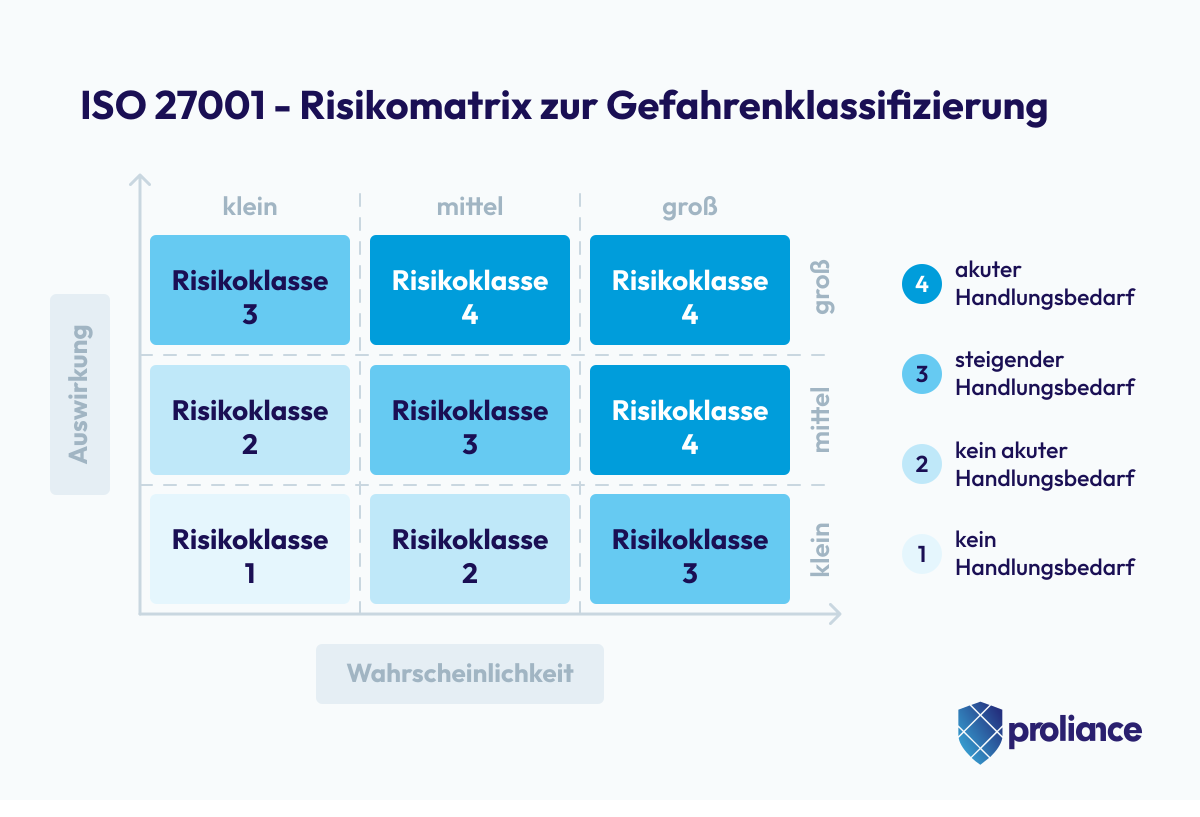
A risk matrix offers you a streamlined, clear assessment logic and simplifies action planning. It facilitates reviews and saves time during audits.
Practical example: An outdated IT system for data processing represents a critical vulnerability for a software company. The probability of an attack is particularly high and the impact on IT security would be severe, as sensitive customer data would be affected. In the risk matrix, this risk must therefore be classified as high priority classified.
ISO 27001 Risk Analysis – The Key to Effective Information Security
If you want to sustainably protect information and IT systems and reliably demonstrate compliance, an ISO-compliant risk analysis is indispensable. It creates transparency, prioritization, and a clear audit trail via Annex A and SoA.
There are no specific requirements for the methodology to conduct your ISO risk assessment. To clearly create and properly document the analysis, it is best to use tabular templates like the risk matrix shown – or the know-how of our experts.
Do you have further questions on this topic? Our experts will be happy to advise you free of charge.